Some back and neck pain needs a doctor today, not a chiropractor. Some back and neck pain is not a case for a chiropractor and needs a doctor the same day. Go to an emergency room, not to us, if you have numbness in the groin or inner thighs, if you have lost control of your bladder or bowels, if a leg is becoming weak rather than just painful, if the pain followed a serious fall or a car crash, if you have a fever with back pain, if you have unexplained weight loss alongside it, if you have a history of cancer, or if a headache came on suddenly and is the worst you have ever had. We would rather you rang your doctor and never rang us at all.
A body at seventy-five is not a body at thirty-five with more mileage. Bone is often thinner, joints are stiffer and more arthritic, ligaments are less forgiving, the medication list is longer and more relevant, and the consequences of a fall are entirely different. All of which means the question is not whether an older adult can see a chiropractor but which techniques are appropriate — and for the great majority of Dr. Halloran's patients, the answer does not include high-velocity manipulation.
What he uses instead is a hand-held adjusting instrument that delivers a single measured tap, a drop-piece table that does most of the work mechanically, and a great deal of slow mobilisation and soft-tissue work. None of it involves twisting. It is undramatic, there is usually no popping sound, and it is well tolerated by people who have been told, sometimes correctly, that they should not be manipulated.
The other half of the job is not about the spine at all. Walking distance, balance, getting out of a chair, leg strength — these determine independence far more than any amount of back treatment does, and a fall matters more than almost anything else on this page. So half of what people leave with is a walking and balance programme, and we will happily spend a visit on that instead of on the table if that is what would actually help.

What changes after sixty
Four things that shape how care is delivered.
Bone density
Osteoporosis and osteopenia change what is safe, and significant osteoporosis rules out thrust technique in the affected area entirely. We ask about scans, fractures, family history, steroid use and medications that affect bone at the first visit, and where there is doubt we ask your doctor rather than assume. This is the single most important screening question in this age group.
Arthritis
Osteoarthritis of the spine, hips and knees is close to universal after a certain age and it is far more treatable than the language around it suggests. Joints that are stiff and painful respond well to mobilisation and, more importantly, to strength work — which improves pain and function reliably regardless of what the x-ray looks like.
Medication
Anticoagulants, long-term steroids, medications affecting bone, and anything causing dizziness or low blood pressure on standing all change what we do and how we do it. Bring the actual list rather than trying to remember — a photograph of the boxes is fine, and it is genuinely useful information rather than a formality.
The consequences of a fall
This is the thing that most changes the calculation. A fall at forty is an inconvenience; a fall at eighty can end independence. So dizziness, unsteadiness, medication side effects and leg strength are part of every assessment here, whether or not you came in about your balance, and we take them as seriously as the back pain.
How we treat
Low force, unhurried, and often not on the table at all.
Instrument-assisted adjusting
A small spring-loaded instrument delivers one measured tap to a specific spot. No twisting, no leverage, no popping, and a tiny fraction of the force of a manual technique. This is the default for most of Dr. Halloran's patients and it is what makes treatment appropriate for people who genuinely should not be manipulated.
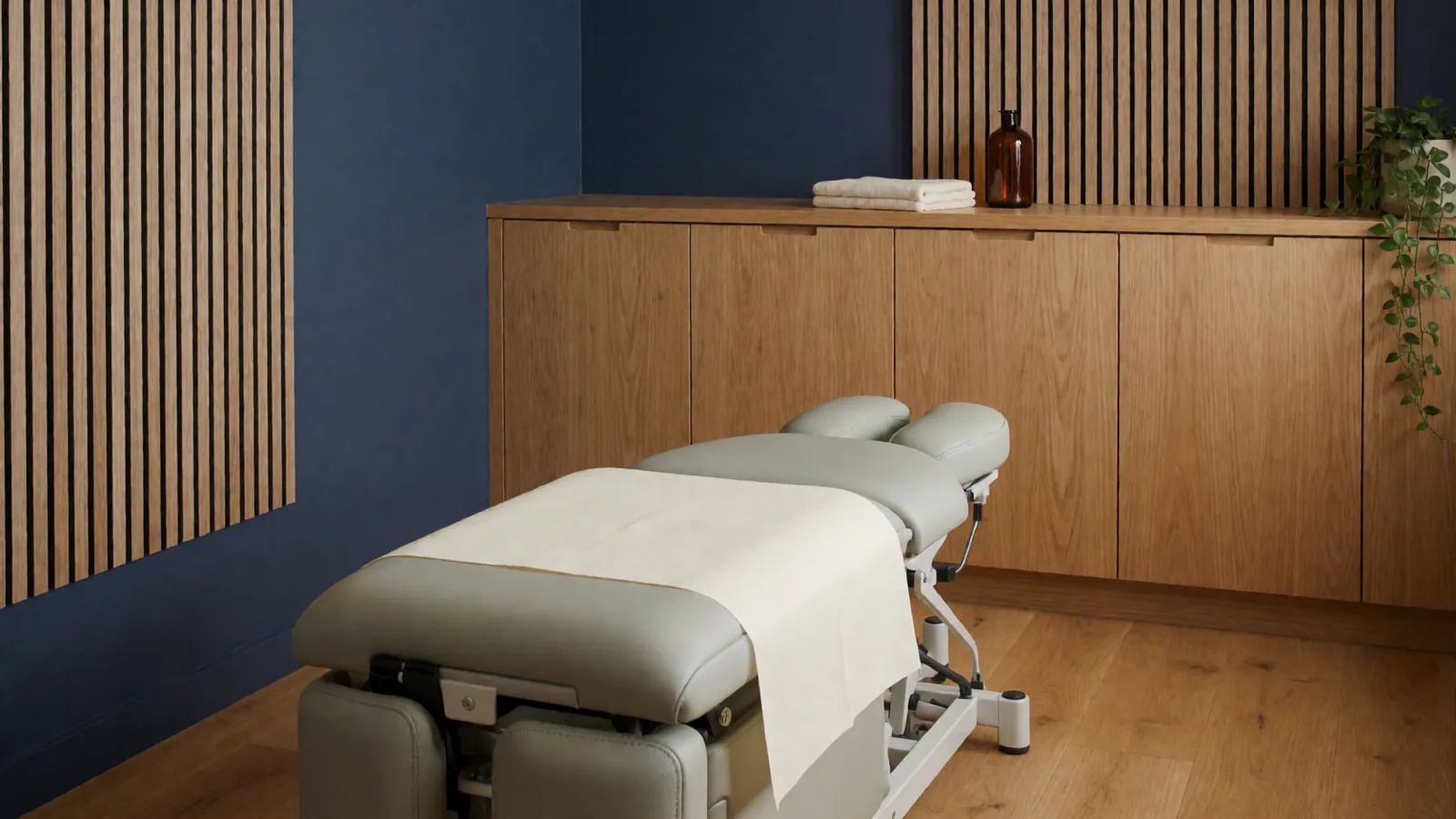
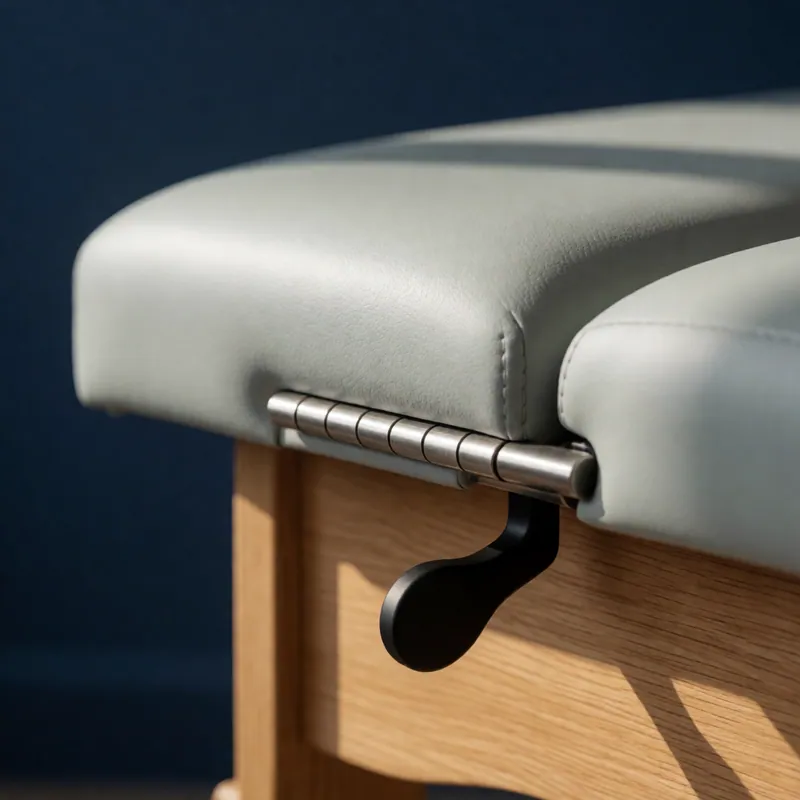
Drop-piece table
The table does the work: a section releases a short distance under gentle pressure, so the joint gets movement without the practitioner needing to generate force through your body. Comfortable, predictable, and easy to stop at any point.
Mobilisation and soft tissue
Slow rhythmic movement of stiff joints, and unhurried hands-on work through the muscle around them. For arthritic spines and hips this is frequently the most useful thing available, and it is well tolerated by people for whom anything faster would not be.
Walking, balance and leg strength
Sit-to-stand practice, calf and thigh strength, balance work, and walking. Unglamorous, genuinely effective, and more relevant to how the next ten years go than any amount of spinal treatment. We would rather spend half a visit on this than fill the time with hands-on work that feels nice and changes less.
When we say no
The situations where the right answer is your doctor rather than us.
A fracture that has not been excluded
New back pain after a fall in someone with thinning bone, or sudden severe mid-back pain with no obvious cause, needs a compression fracture excluded before anybody treats it. These are common, they are frequently missed, and they occasionally occur with no memorable injury at all. Imaging first, treatment afterwards.
Unexplained new symptoms
New back pain in an older adult with no mechanical explanation, particularly with weight loss, night pain that will not settle in any position, fever, or a history of cancer, is a medical question first. We examine, we write to your doctor that week, and we do not start a course of treatment in the meantime.
Progressive weakness or walking difficulty
Legs that are becoming weaker, increasing difficulty walking, unsteadiness that is worsening, or any change in bladder or bowel control needs proper medical assessment rather than spinal treatment. Some of these are urgent and we will say so on the day rather than book a follow-up.
When manipulation is simply not appropriate
Sometimes the honest answer is that thrust technique should not be used on you at all. That is not the end of the conversation — there is a great deal we can still do with instrument work, mobilisation, soft tissue and exercise — but you will be told plainly which door is closed and why.
Care After Sixty in western Queens
Thinner bone, stiffer joints and longer medication lists mean different hands. Dr. Halloran almost never twists anybody, and half of what he prescribes is about walking and balance.
Every course of care here starts the same way: a full hour, a proper history, an examination, and then a plain statement of what we think is going on and how confident we are about it. You are told what we propose, roughly how many visits it ought to take and what should have changed by when — and we agree a date to stop and look at whether it worked. If the honest answer at any point is that this needs somebody else, you get that instead, and we write to them the same week.
Chiropractic care is not a substitute for medical diagnosis. Chiropractic care is not a substitute for medical diagnosis, and nothing on this website is medical advice for your particular problem. We are not physicians: we do not prescribe medication, we do not perform surgery, and we do not treat disease. What we do is examine how your spine and joints move, work on them by hand, and give you something to do between visits. If your problem turns out to be outside that, we say so and refer you — which happens often enough that you should expect it as a normal outcome rather than a failure.
What chiropractic does not treat. We treat musculoskeletal problems: the spine, the joints, the muscles and the nerves that are irritated by them. We do not claim that adjusting a spine treats asthma, allergies, ear infections, colic, digestive disease, high blood pressure, infertility, immune function or any other internal illness. Chiropractors who make those claims are making them without good evidence, and you should be wary of anybody who does. If somebody has told you that spinal care will fix a condition on that list, we will tell you honestly that it will not.
Questions
Care After Sixty — the questions we are asked most
I have osteoporosis. Can I still be treated?
Usually yes, but not with thrust technique in the affected area — that is ruled out by significant osteoporosis. Instrument-assisted adjusting, drop-piece technique, mobilisation and soft-tissue work are all appropriate and are what most of our patients with thinning bone receive. Bring any bone density results you have, and tell us about fractures and steroid use. Where there is doubt we ask your doctor.
Am I too old for a chiropractor?
Age on its own is not a reason to avoid treatment — what matters is which techniques are appropriate for your bones, your joints and your medication. Dr. Halloran has spent fifteen years working almost entirely with patients over sixty, and almost nothing he does involves a twist. He is also the person most likely to agree with whoever told you to be careful, if he thinks they were right.
My x-ray says severe arthritis. Is there any point?
Yes, and more than people expect. What appears on an x-ray correlates poorly with how much anybody hurts, and strength and mobility work reliably improve pain and function in arthritic joints without changing anything on the image. Being told a joint is worn out and should be rested is close to the worst advice available, because the muscle around it does a great deal of the work.
Will you crack my neck?
Almost certainly not, and not unless you specifically wanted it and there were no reason to avoid it. The default for older patients here is instrument-assisted technique, drop-piece work and mobilisation, none of which involves twisting or popping. If somebody has told you your neck should be left alone, tell us who and why, and we will very likely agree with them.
I am worried about falling. Can you help with that?
Yes, and we treat it as seriously as back pain because the consequences are greater. Balance, leg strength, sit-to-stand ability and walking distance are all assessed and all trainable, and a programme for them is part of what most of our older patients leave with. We will also flag medication side effects and dizziness to your doctor, since those are common contributors we cannot treat ourselves.
I take a blood thinner. Does that matter?
Yes, it is relevant, and it is one of the things we ask about specifically. It does not rule out treatment but it does change technique selection and how firm the soft-tissue work is, since bruising comes more easily. Bring your full medication list to the first appointment — a photograph of the boxes is perfectly good, and it is more accurate than anybody's memory.
Related
Often seen alongside this
Everyday & Life Stage
Posture Correction
There is no single correct posture, and plenty of people with textbook posture are in pain. What actually helps is capacity, variety and how long you hold any one position.
Read more
Everyday & Life Stage
Prenatal Chiropractic
Side-lying, bolstered and low force, for the back, pelvis and hips that pregnancy makes ache. Nothing we do involves a twist through the abdomen, and we make no claims about the birth.
Read more
Everyday & Life Stage
Pediatric Chiropractic
Children get back and neck pain from sport, bags and falls, and that is worth looking at. We do not treat colic, reflux, ear infections, sleeping or behaviour, and we say so before you book.
Read moreA fee agreed before the visit, not after it
Book an appointment
Pick a chiropractor and an hour from the calendar — it shows only the times each of them genuinely has free. A first visit is a full hour and costs $95 for the examination on its own, or $145 if we treat you at the same appointment. You decide which after the examination, not before.