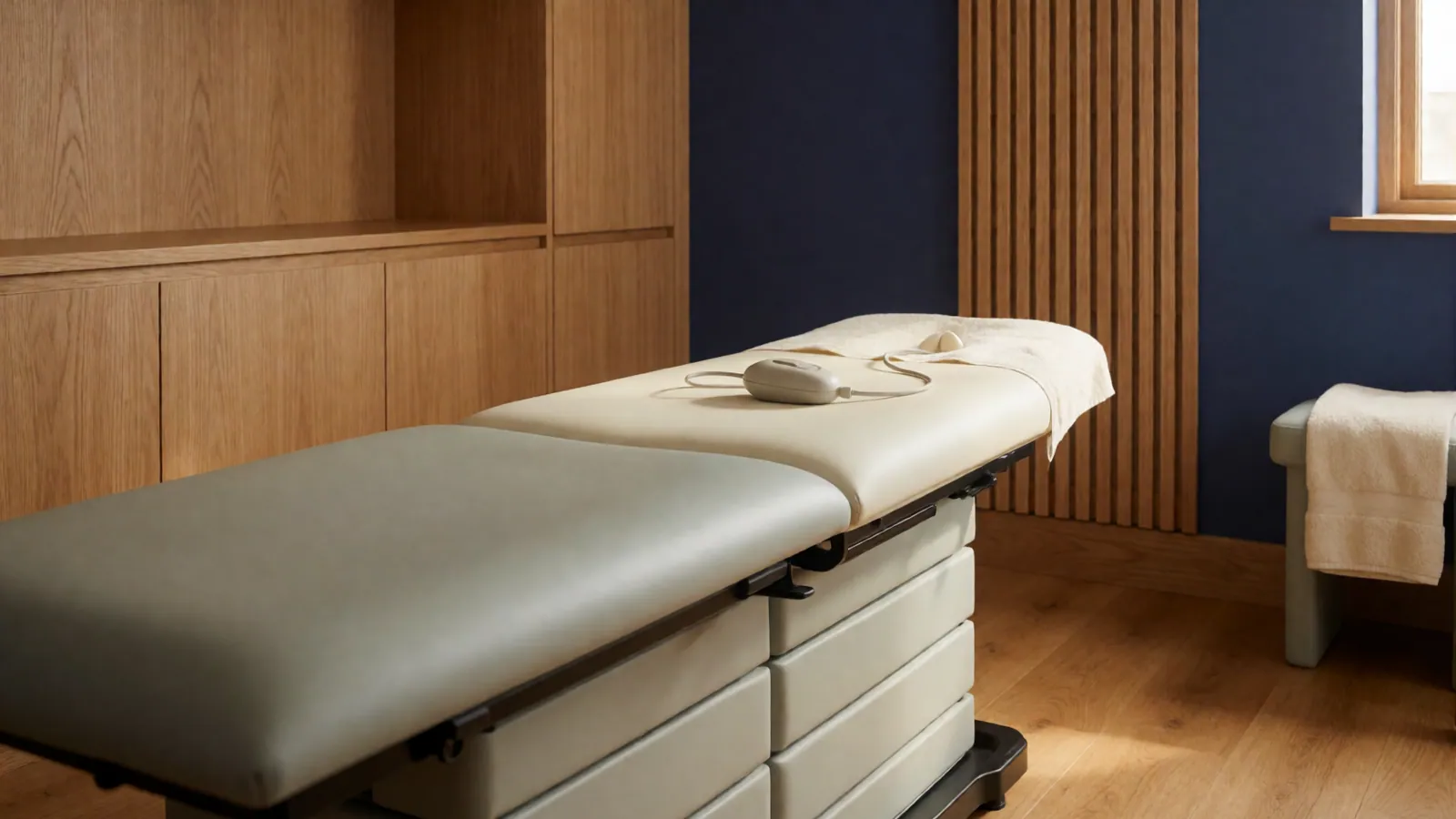
Some back and neck pain needs a doctor today, not a chiropractor. Some back and neck pain is not a case for a chiropractor and needs a doctor the same day. Go to an emergency room, not to us, if you have numbness in the groin or inner thighs, if you have lost control of your bladder or bowels, if a leg is becoming weak rather than just painful, if the pain followed a serious fall or a car crash, if you have a fever with back pain, if you have unexplained weight loss alongside it, if you have a history of cancer, or if a headache came on suddenly and is the worst you have ever had. We would rather you rang your doctor and never rang us at all.
Sciatica is one of those words that has escaped from medicine into ordinary conversation and lost precision on the way. Strictly it means pain following the sciatic nerve — buttock, back of the thigh, calf, sometimes into the foot — and it is a symptom rather than a diagnosis. The useful question is what is irritating the nerve. Most often it is a disc bulging against a nerve root in the lower back; sometimes it is a narrowed opening where the root exits; sometimes what looks like sciatica is actually referred pain from a joint and never involved the nerve at all.
Telling those apart is what the first hour is for. A proper neurological examination — reflexes, strength, sensation and the specific tests that put the nerve under tension — tells us a great deal more than a scan does at this stage, and it also tells us whether anything is getting worse. Genuine nerve root irritation has a recognisable pattern; a buttock that aches after sitting is usually a different and more forgiving problem.
The good news is that most sciatica settles. It is often miserable for a few weeks and it can take a few months to fully resolve, but the large majority of people get better without surgery, and conservative care aimed at reducing the irritation, keeping you moving and loading the tissue progressively is a reasonable first course. The important exception is the small group who are getting worse rather than better, and we watch for that deliberately at every visit rather than assuming.
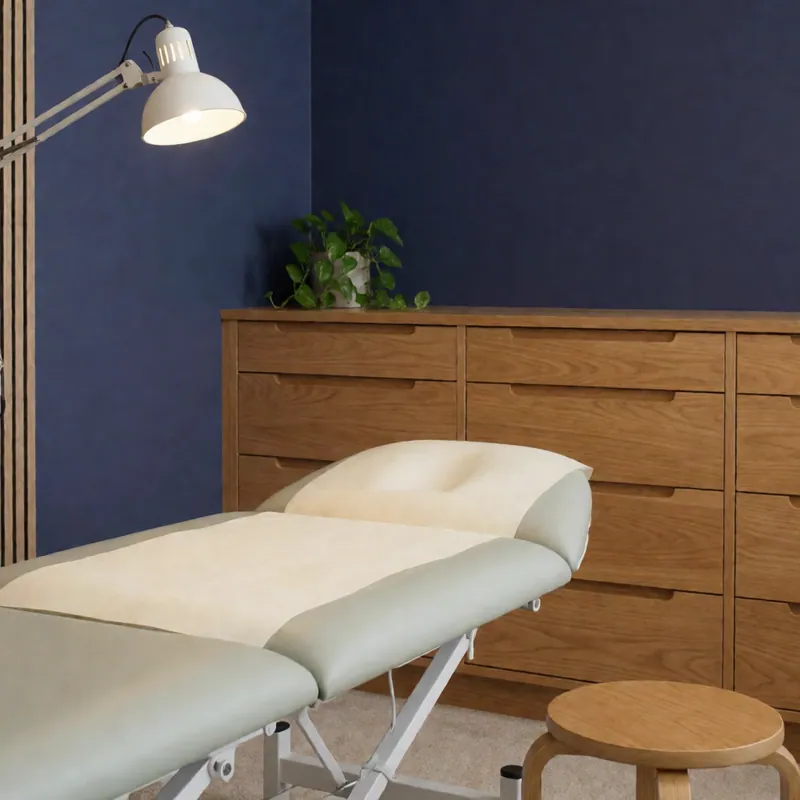
What is irritating the nerve
Four common answers, each with a different plan and a different timeline.
A disc against a nerve root
The commonest cause under fifty. Part of the disc bulges backwards and sideways and contacts the nerve root leaving the spine, and the root becomes both compressed and chemically irritated. The pain is usually worse than the back pain that accompanies it, often worse sitting, and often eased by standing or walking. Most settle over weeks to months. The disc injury care page goes into it.
A narrowed exit for the root
More common after sixty. Age-related thickening narrows the space the nerve travels through, and the classic story is leg pain and heaviness that comes on after a few minutes of walking and is relieved by sitting down or leaning forward on a shopping trolley. It behaves differently from disc pain and the treatment plan differs accordingly.
Pain referred from a joint
Not everything down a leg is a nerve. An irritated joint in the lower back or the pelvis can refer pain into the buttock and the back of the thigh without any nerve involvement at all. It usually stops above the knee, it does not produce true numbness or weakness, and it tends to respond faster to hands-on treatment than genuine root irritation does.
Muscle in the buttock
Deep buttock pain that is worse after long sitting and tender to press on is sometimes muscular rather than spinal. It is over-diagnosed by people who like the label and under-considered by people who do not, and the examination usually separates it from root irritation fairly clearly. It responds well to soft-tissue work and to loading the hip.
What we do about it
Reduce the irritation, keep you moving, then load the tissue. In that order.
Find the direction that helps
Most irritated nerve roots have a movement direction that eases symptoms and one that provokes them, and finding yours is one of the more useful things the first appointment produces. It gives you something to do in the bad hours, it guides how we treat, and it is often the difference between a fortnight that is bearable and one that is not.
Hands-on work, appropriately chosen
Flexion-distraction — a table that gently opens and closes the lower back while the chiropractor works — is often the first thing tried for disc-related leg pain, because it is comfortable and does not require a thrust. Mobilisation and soft-tissue work through the hip and buttock usually accompany it. Vigorous rotational manipulation is generally not the right answer for an acutely irritated root.
Keep walking
Sitting is usually the worst position for disc-related leg pain and total rest is worse still. Short, frequent walks, standing up regularly, and breaking long journeys are unglamorous and they matter. We would rather you walked five times for ten minutes than once for an hour, and rather you did that than waited for it to stop hurting first.
Then load it
Once symptoms are settling and no longer travelling as far down the leg, the plan shifts from calming things down to building capacity back — hips, trunk and the whole posterior chain. This is the part that reduces the chance of a repeat, and it is the part people skip once the leg stops screaming.
When it needs somebody other than us
Read this section properly. Two of these are same-day problems.
Numbness in the groin, or bladder or bowel changes
Numbness in the groin, buttocks or inner thighs, or difficulty passing urine or controlling your bladder or bowels, alongside leg pain, is a surgical emergency. Go to an emergency room immediately. Do not book here, do not wait for morning, and do not ring us first. The delay is what causes lasting harm, and it is measured in hours.
Weakness that is getting worse
A foot that drops or catches on kerbs, a leg that gives way on stairs, or difficulty rising onto your toes — particularly when it is worse this week than last — means the nerve is losing function rather than simply hurting. That needs imaging and a specialist opinion rather than another treatment. We check for this at every single visit.
Both legs at once
Sciatica affecting both legs simultaneously is uncommon and is taken seriously until proven otherwise. So is leg pain with a fever, with unexplained weight loss, or in anybody with a history of cancer. These are medical questions first. We will examine you, and then we will write to your doctor the same day rather than start a course of treatment.
Nothing is changing
Severe leg pain that has not begun to improve at all after six to eight weeks of sensible conservative care is a reason to get imaging and a specialist opinion, even without any alarming signs. Continuing to treat something that is not responding is not persistence, it is avoidance. We agree the review date at the first visit precisely so this conversation happens on time.
Sciatica & Leg Pain in western Queens
Pain, pins and needles or numbness running from the back into the leg. Usually an irritated nerve root, usually settling over weeks to months, and occasionally a reason to be examined urgently.
Every course of care here starts the same way: a full hour, a proper history, an examination, and then a plain statement of what we think is going on and how confident we are about it. You are told what we propose, roughly how many visits it ought to take and what should have changed by when — and we agree a date to stop and look at whether it worked. If the honest answer at any point is that this needs somebody else, you get that instead, and we write to them the same week.
Chiropractic care is not a substitute for medical diagnosis. Chiropractic care is not a substitute for medical diagnosis, and nothing on this website is medical advice for your particular problem. We are not physicians: we do not prescribe medication, we do not perform surgery, and we do not treat disease. What we do is examine how your spine and joints move, work on them by hand, and give you something to do between visits. If your problem turns out to be outside that, we say so and refer you — which happens often enough that you should expect it as a normal outcome rather than a failure.
What chiropractic does not treat. We treat musculoskeletal problems: the spine, the joints, the muscles and the nerves that are irritated by them. We do not claim that adjusting a spine treats asthma, allergies, ear infections, colic, digestive disease, high blood pressure, infertility, immune function or any other internal illness. Chiropractors who make those claims are making them without good evidence, and you should be wary of anybody who does. If somebody has told you that spinal care will fix a condition on that list, we will tell you honestly that it will not.
Questions
Sciatica & Leg Pain — the questions we are asked most
How long does sciatica take to go?
Most people improve substantially over four to twelve weeks, and a minority take longer. The leg pain usually settles before the back pain does, and a good early sign is the pain retreating up the leg — from calf to thigh to buttock — even while it is still there. That is called centralisation and it is genuinely encouraging. Pain travelling further down the leg over time is the pattern we do not want.
Will I need surgery?
Most people do not. The large majority of disc-related sciatica settles with conservative care, and surgery tends to speed up early relief without changing where people are a year or two later — with the important exception of those with significant or progressing weakness, where it is a different conversation entirely. Surgery becomes the sensible option for severe pain that has not budged over months, or for a nerve losing function.
Is it safe to be adjusted when I have sciatica?
It depends on what is causing it and how irritable it currently is. Vigorous rotational manipulation of an acutely inflamed nerve root is generally not a good idea, which is why flexion-distraction, mobilisation and soft-tissue work are usually the first choices instead. The examination decides this, not a routine. If we do not think hands-on treatment is right for your leg this week, we will say so.
Should I stretch my hamstring?
Careful — if the nerve is irritated, a hard hamstring stretch is a nerve stretch, and it frequently makes things worse rather than better. What feels tight in an irritated leg is often the nerve rather than the muscle. There are gentle nerve-mobility movements that suit some people at some stages, and we will show you those if they are appropriate for you rather than handing you a generic sheet.
Why does it hurt more when I sit?
Sitting increases the pressure on the discs in the lower back and puts the nerve on a slight stretch at the same time, which is why disc-related leg pain is so often worst in a car, at a desk or on a low sofa. Standing up every twenty to thirty minutes, sitting further back in the seat, and breaking long journeys make a real difference to how the day goes, even though none of it is treatment.
My foot has gone numb. Should I worry?
Numbness alone, in a patch, that is stable, is common with an irritated nerve root and usually improves as the irritation settles. What concerns us is weakness rather than numbness, and change rather than presence — numbness spreading week by week, or a foot that has started catching on kerbs. Tell us at your next visit either way; if it is spreading or your foot is weak, ring the same day.
Related
Often seen alongside this

Spine & Nerve Pain
Chiropractic Adjustment
The technique the whole trade is named after: a short, shallow, quick movement through a stiff joint. It takes a fraction of a second, it is usually a relief rather than a pain, and it is not the only thing we do.
Read more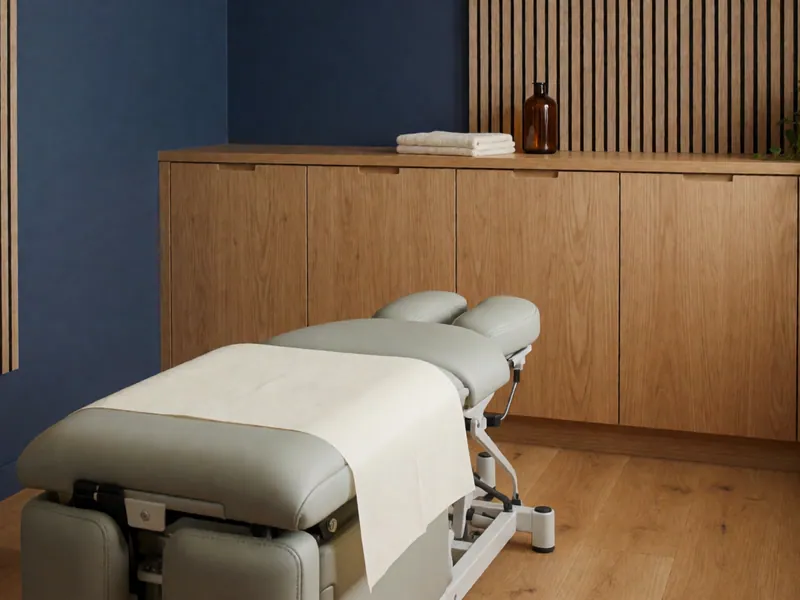
Spine & Nerve Pain
Lower Back Pain
The single most common reason anybody rings this clinic. Most of it is a joint and the muscle around it, most of it improves inside a few weeks, and most of it does not need a scan.
Read more
Spine & Nerve Pain
Neck Pain
A neck that will not turn, a shoulder that aches with it, and a headache creeping up the back of the skull. Treatable — and treatable without high-velocity manipulation if that is what you would prefer.
Read moreA fee agreed before the visit, not after it
Book an appointment
Pick a chiropractor and an hour from the calendar — it shows only the times each of them genuinely has free. A first visit is a full hour and costs $95 for the examination on its own, or $145 if we treat you at the same appointment. You decide which after the examination, not before.