
Some back and neck pain needs a doctor today, not a chiropractor. Some back and neck pain is not a case for a chiropractor and needs a doctor the same day. Go to an emergency room, not to us, if you have numbness in the groin or inner thighs, if you have lost control of your bladder or bowels, if a leg is becoming weak rather than just painful, if the pain followed a serious fall or a car crash, if you have a fever with back pain, if you have unexplained weight loss alongside it, if you have a history of cancer, or if a headache came on suddenly and is the worst you have ever had. We would rather you rang your doctor and never rang us at all.
Almost everybody arriving for a first appointment has the same picture in their head, assembled from films and from a cousin who went to somebody in the nineties: a violent twist, a loud crack, and either instant relief or a broken neck. The real thing is duller than that. You lie on a padded table. The chiropractor finds a joint that is not moving the way its neighbours move, takes it gently to the end of its normal range, and applies a small, fast, shallow push. It travels perhaps a few millimetres. It is finished before most people have registered that it started.
The sound gets far more attention than it deserves. When the two surfaces of a joint are separated quickly, the pressure inside the fluid drops and a bubble of gas forms — the same physics as knuckle-cracking. That is the pop. It is not a bone going back into place, it is not a vertebra being reset, and its volume tells you nothing whatsoever about whether the treatment worked. Some of the most useful techniques in this building make no noise at all, and a joint that pops loudly can be no better an hour later.
What an adjustment is genuinely good for is a joint that has become stiff and painful and is guarding itself — the classic locked-up lower back, the neck that will not turn to one side, the mid-back that catches when you breathe in. It tends to buy a window of easier movement, and what you do with that window matters more than the push did. That is why nobody leaves here without something to do at home, and why we agree in advance when we will stop and look at whether this is working.

The four ways we move a joint
Adjustment is one option on a list, not the whole list, and the right one depends on you rather than on us.
Hands-on adjustment
The classic technique. The chiropractor's hands take the joint to the end of its normal range and apply a short, fast, shallow thrust. Very little force is involved — far less than people expect — because speed does the work rather than strength. It suits stiff, guarded joints in otherwise healthy adults, and it is the technique most likely to produce the popping sound everybody asks about.
Drop-piece table
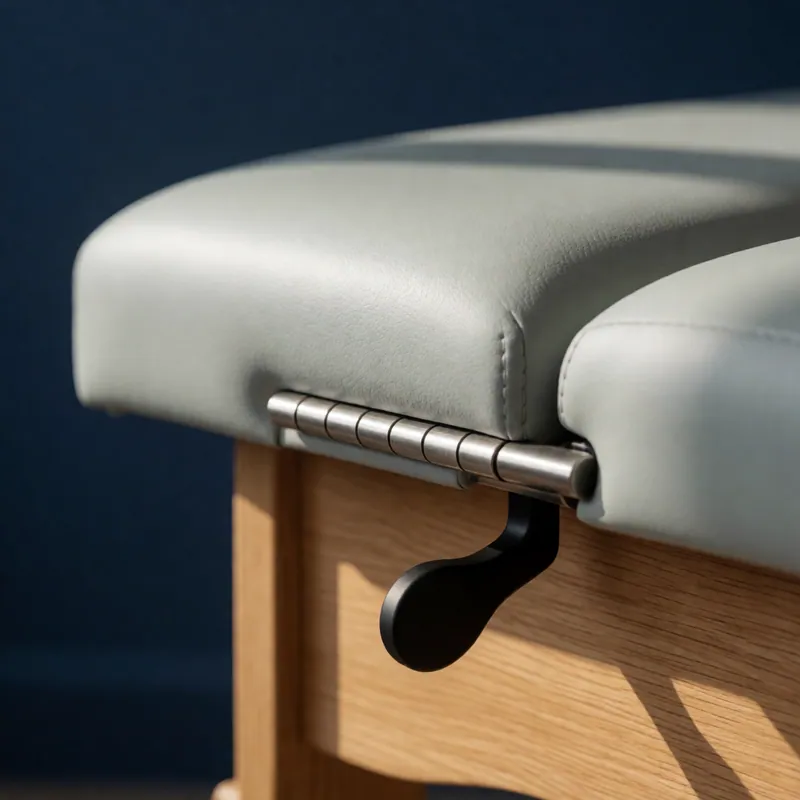
Part of the table drops a short distance under you as the pressure is applied, so the joint gets its movement while the chiropractor uses a fraction of the force. It feels like a firm press followed by a small clunk from underneath. It is our default for larger patients, for painful and irritable joints, and for anybody who does not want to be twisted at all.
Instrument-assisted
A small spring-loaded hand instrument delivers one measured tap to one spot. No twisting, no popping, no leverage through the body. It is the technique Dr. Halloran uses with most of his patients, it is what we reach for when bone density is a concern, and it is the answer for people who want treatment but genuinely do not want to be manipulated.
Mobilisation
Slow, rhythmic movement of the joint back and forth through its range, with no thrust at the end at all. It is the least dramatic thing on this list and for a lot of irritable, acutely painful joints it is the more sensible option — you can do it for longer, it provokes far less guarding, and it does not require the patient to relax on command.
What it feels like, and afterwards
The honest version, including the bit most clinics leave out.
During
Pressure, then a quick movement, then it is over. Most people describe it as a relief rather than a pain — the sensation of something that was stuck coming unstuck. If it hurts, say so immediately and we stop. Nobody here will talk you through something that is hurting on the grounds that it is good for you.
The first day
Being a bit sore is common and normal, and it catches people out because they expected only improvement. It feels like the day after unfamiliar exercise: a dull ache, some stiffness, occasionally tiredness. It usually settles within twenty-four to forty-eight hours. Keep moving gently, and use heat or ice, whichever makes you feel better.
What is not normal
Sharp pain that is worse than before and getting worse, new numbness or weakness, a severe headache, dizziness, visual disturbance or difficulty speaking or swallowing. None of these is an expected part of recovery. Ring us the same day, and if any of the last four are severe or sudden, go to an emergency room rather than waiting for us to call back.
How many visits
For a sudden lock-up, often three to six. If nothing at all has changed by the fourth visit we stop and think again rather than booking a fifth — that is agreed with you in advance, in writing, at the first appointment. Long-running pain moves more slowly and is measured by what you can do rather than by how it feels on the day.
When we will not adjust you
The list of reasons to leave a joint alone is longer than most people expect, and it is part of the examination rather than an afterthought.
Bone that will not take it
Significant osteoporosis, a known or suspected fracture, long-term steroid use that has thinned the bone, some bone tumours and some infections all rule out thrust techniques in the affected area. This is one of the main reasons the first visit is an hour and involves a lot of questions about your medical history rather than only about your back.
A nerve that is being squeezed harder
Pain travelling below the knee or the elbow that is getting worse, weakness that is progressing, or numbness that is spreading means something is being compressed and needs assessing properly rather than manipulating. That usually means imaging and often means a referral. Occasionally it means the emergency room the same day.
Anything on the red-flag list
Loss of bladder or bowel control, numbness in the groin or inner thighs, fever with back pain, unexplained weight loss, a history of cancer, or pain that followed a serious fall. We do not treat these and we do not investigate them at leisure — we send you to a doctor the same day. The risks and safety page lists them in full.
Because you would rather we did not
This is a complete reason on its own and it needs no justification. If you do not want your neck manipulated, or you do not want thrust techniques at all, say so at any point and we will treat you another way. You will not be argued with, and it will not be raised again at the next visit.
Chiropractic Adjustment in western Queens
The technique the whole trade is named after: a short, shallow, quick movement through a stiff joint. It takes a fraction of a second, it is usually a relief rather than a pain, and it is not the only thing we do.
Every course of care here starts the same way: a full hour, a proper history, an examination, and then a plain statement of what we think is going on and how confident we are about it. You are told what we propose, roughly how many visits it ought to take and what should have changed by when — and we agree a date to stop and look at whether it worked. If the honest answer at any point is that this needs somebody else, you get that instead, and we write to them the same week.
Chiropractic care is not a substitute for medical diagnosis. Chiropractic care is not a substitute for medical diagnosis, and nothing on this website is medical advice for your particular problem. We are not physicians: we do not prescribe medication, we do not perform surgery, and we do not treat disease. What we do is examine how your spine and joints move, work on them by hand, and give you something to do between visits. If your problem turns out to be outside that, we say so and refer you — which happens often enough that you should expect it as a normal outcome rather than a failure.
What chiropractic does not treat. We treat musculoskeletal problems: the spine, the joints, the muscles and the nerves that are irritated by them. We do not claim that adjusting a spine treats asthma, allergies, ear infections, colic, digestive disease, high blood pressure, infertility, immune function or any other internal illness. Chiropractors who make those claims are making them without good evidence, and you should be wary of anybody who does. If somebody has told you that spinal care will fix a condition on that list, we will tell you honestly that it will not.
Questions
Chiropractic Adjustment — the questions we are asked most
Is the popping sound my spine going back into place?
No. The sound is a bubble of gas forming in the fluid inside the joint when its surfaces separate quickly — the same thing that happens when somebody cracks a knuckle. Nothing is going back into place, because nothing was out of place in the way that phrase implies. The volume of the pop tells you nothing about how well the treatment worked, and several of the techniques we use here make no sound whatsoever while doing exactly the same job.
Can an adjustment fix my asthma or my blood pressure?
No. We do not claim that adjusting a spine treats asthma, blood pressure, allergies, digestion, immunity or any other internal illness, and we will not treat you for any of them. Chiropractic works on the musculoskeletal system — joints, muscles, and the nerves irritated by them. If somebody has told you otherwise, they were making a claim without good evidence behind it. Please see your doctor about all of those.
Once I start, will I have to keep coming forever?
No, and a clinic that tells you otherwise is selling something. Most problems we see are finished in four to eight visits. We agree a review date at the first appointment and we stop there and look properly rather than drifting on. Some people choose to come back when something flares up months later, which is an entirely different thing from an open-ended plan sold to you before you had been examined. We do not sell packages.
Does it hurt?
Usually not, and most people describe the moment itself as a relief. Being sore for a day or two afterwards is common and normal, particularly after a first treatment, and it feels like the ache after unfamiliar exercise rather than like an injury. If the treatment itself hurts, say so and we stop immediately. Sharp or increasing pain in the days afterwards is not part of the process and is a reason to ring us.
I do not want my neck cracked. Can I still be treated?
Yes, and you will not have to argue for it. Necks can be treated perfectly well with mobilisation, instrument-assisted technique, soft-tissue work and exercise, and for a good number of people those are the better options anyway. Tell whoever sees you at the start of the appointment. It goes in your notes, it is not queried at the next visit, and nobody will try to talk you round to it.
Should I have an x-ray before you adjust me?
Usually no. Routine imaging before treatment does not improve outcomes for ordinary back and neck pain, and it frequently finds harmless age-related changes that alarm people for no good reason — plenty of comfortable backs look dreadful on film. Imaging earns its place when the history or the examination points at something specific. When you need it, we refer you for it and go through the report with you.
Related
Often seen alongside this
Spine & Nerve Pain
Lower Back Pain
The single most common reason anybody rings this clinic. Most of it is a joint and the muscle around it, most of it improves inside a few weeks, and most of it does not need a scan.
Read more
Spine & Nerve Pain
Neck Pain
A neck that will not turn, a shoulder that aches with it, and a headache creeping up the back of the skull. Treatable — and treatable without high-velocity manipulation if that is what you would prefer.
Read more
Spine & Nerve Pain
Sciatica & Leg Pain
Pain, pins and needles or numbness running from the back into the leg. Usually an irritated nerve root, usually settling over weeks to months, and occasionally a reason to be examined urgently.
Read moreA fee agreed before the visit, not after it
Book an appointment
Pick a chiropractor and an hour from the calendar — it shows only the times each of them genuinely has free. A first visit is a full hour and costs $95 for the examination on its own, or $145 if we treat you at the same appointment. You decide which after the examination, not before.