Some back and neck pain needs a doctor today, not a chiropractor. Some back and neck pain is not a case for a chiropractor and needs a doctor the same day. Go to an emergency room, not to us, if you have numbness in the groin or inner thighs, if you have lost control of your bladder or bowels, if a leg is becoming weak rather than just painful, if the pain followed a serious fall or a car crash, if you have a fever with back pain, if you have unexplained weight loss alongside it, if you have a history of cancer, or if a headache came on suddenly and is the worst you have ever had. We would rather you rang your doctor and never rang us at all.
Almost everybody who books a first appointment has some version of the same worry: that they will be put on a table by somebody they have just met, twisted hard, and then sold a plan for the next six months. So it is worth saying plainly what actually happens, because it is duller and more useful than that.
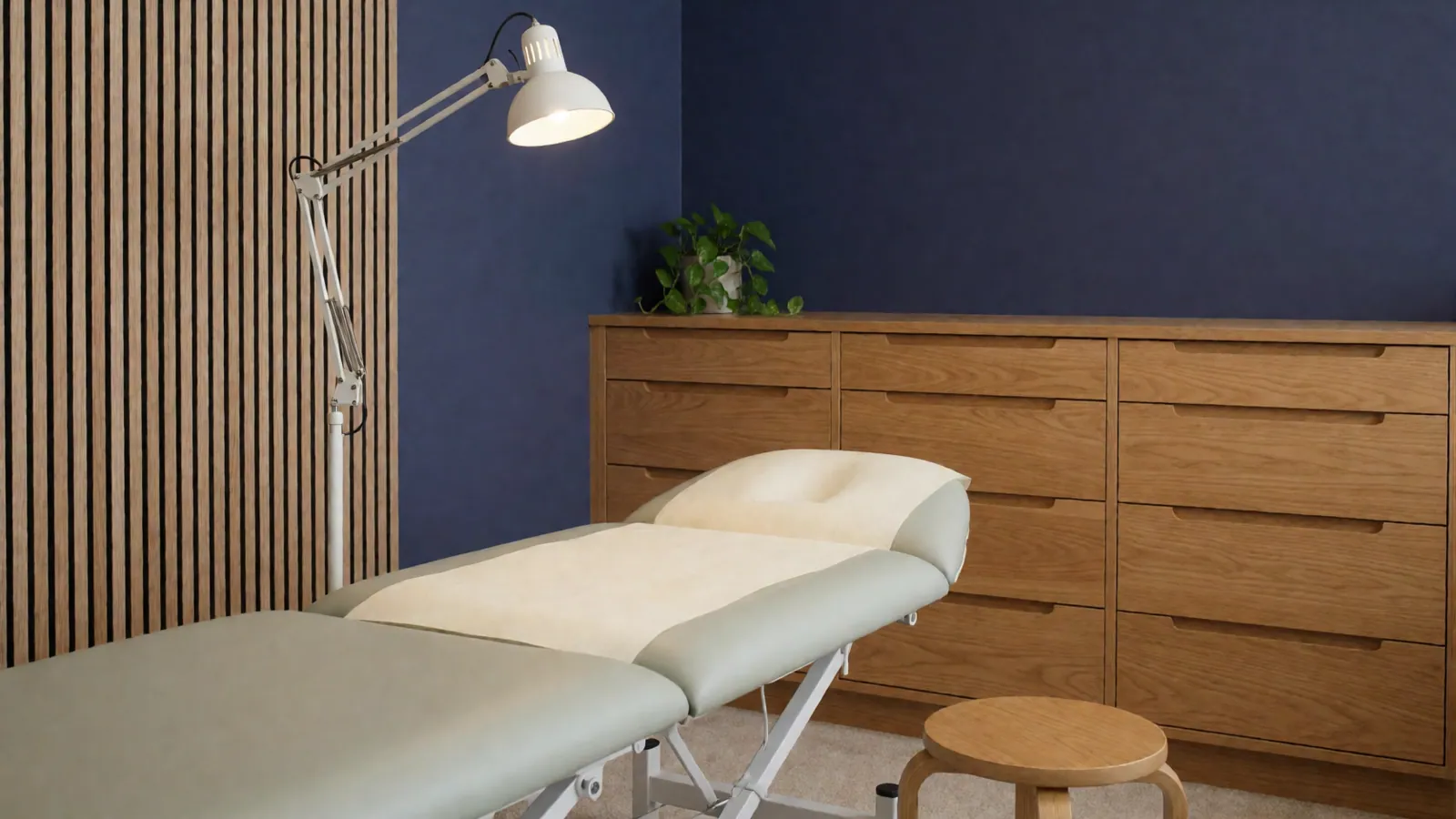
You will spend most of the hour talking and being examined. You will be told what we think is going on and how confident we are about it, in words rather than jargon. You will be told what we propose, what it costs and roughly how many visits it should take — and we will agree a date to stop and check whether it worked. Nothing is done to you that has not been described first, and anything you would rather not have done will not be done.
A perfectly normal outcome is that we examine you, decide chiropractic is not the right answer, and write to your doctor instead. That visit still costs $95, and it is a better result than eight visits of something that was never going to work.

Practical
What to bring, wear and expect
Bring
A list of your medications, anything you already have from a doctor — imaging reports, letters, a referral — your insurance card if you have one, and clothes you can move in. Not a suit.
Arrive
Ten minutes early the first time. There is paperwork, and doing it at the desk with a pen beats doing it in the room with the clock running.
Expect
Sixty minutes. Most of it is talking and examining. Some first visits end without any treatment at all, because the examination changed what we thought.
Wear
Loose trousers or shorts and a t-shirt. We do not put people in gowns.
Afterwards
Possibly a little sore, the way you are after unfamiliar exercise, for a day or so. Drink water, keep moving gently, and ring us if anything worries you.
Cost
$95 for the examination alone, $145 if we also treat you at the same visit. You are told which it will be before it happens.
The hour itself
How a course of care runs, from the booking to the point we stop
Six steps. The last one is the one most clinics leave out, and it is the reason nobody here ends up on an open-ended plan nobody ever reviews.
The call or the booking form
You pick a chiropractor and a time from the calendar on the booking page, or you ring and we do it for you. The calendar shows only hours that are genuinely free — it is reading the same schedule the chiropractor keeps, so an hour that is on screen is an hour you can have.
A full hour, the first time
History first and at length: what happened, when, what makes it worse, what you do all day, what you have already tried, what medication you take and what else is going on with your health. Then an examination — movement, strength, reflexes, sensation, and the orthopaedic tests that matter for your particular story.
What we think, in plain words
You get told what we believe is going on, how confident we are, what we propose to do, roughly how many visits that ought to take and what should change by when. If the honest answer is that we do not know, or that this needs a doctor, that is what you get instead.
Treatment, if it is the right call
Adjustment, mobilisation, soft tissue work, or none of those. You will be told what is about to happen before it happens, and anything you would rather not have done will not be done.
Something to take home
One to three things, written down, that take under ten minutes a day. This is the part that does the work. A clinic that gives you nothing to do at home is a clinic that needs you to keep coming back.
A review date
We agree in advance when we will stop and look at whether this is working — usually after four to six visits. If it is not working, we change the plan or we refer you on. We do not simply carry on.
Afterwards
What you leave with
Three things, every time: a plain explanation of what we think is going on, one to three specific things to do at home that take under ten minutes a day, and a date at which we will stop and look at whether this is working.
- A clear statement of what we think is wrong, and how confident we are
- One to three exercises, written down, with a rule for making them harder
- A realistic number of visits rather than an encouraging one
- A review date, agreed in advance, usually after four to six visits
- A referral letter to your doctor, if that is what the examination pointed at
- The fee you were quoted, and no other fee

Questions
First visit — the questions we are asked most
How long is the first appointment?
A full hour. Most of it is history and examination rather than treatment, because working out what is actually going on is the part that determines whether anything we do afterwards is worth doing. That hour is the same whether it ends with treatment, with a home programme, or with us writing to your doctor.
What should I wear?
Loose trousers or shorts and a t-shirt — something you can move in and bend in. We do not put people in gowns, and you will not be asked to undress beyond what is needed to examine the area in question. If you are coming from work and that is not practical, tell us when you arrive and we will work around it.
What should I bring?
A list of your medications — a photograph of the boxes is perfectly good and more accurate than memory — anything you already have from a doctor such as imaging reports or letters, your insurance card if you have one, and the claim number if this is a car accident or a work injury.
Will I get treated on the first visit?
Usually, but not always, and you decide. $95 covers the examination on its own; $145 covers the same hour with treatment included, and you choose between them after the examination rather than before it. Some first visits end with no treatment at all because what we found changed the plan, and that is a good outcome rather than a wasted appointment.
Will I be sore afterwards?
Possibly, for a day or so, and it catches people out because they expected only improvement. It feels like the ache after unfamiliar exercise rather than like an injury, and it is more common after a first treatment than later ones. Keep moving gently, use heat or ice depending on which feels better, and ring us if anything worries you.
Can somebody come in with me?
Yes, always, and for anybody under eighteen a parent or guardian must be present for the whole appointment. If you would be more comfortable with somebody in the room for any reason at all, bring them — you do not need to explain why and nobody will ask.
Chiropractic care is not a substitute for medical diagnosis. Chiropractic care is not a substitute for medical diagnosis, and nothing on this website is medical advice for your particular problem. We are not physicians: we do not prescribe medication, we do not perform surgery, and we do not treat disease. What we do is examine how your spine and joints move, work on them by hand, and give you something to do between visits. If your problem turns out to be outside that, we say so and refer you — which happens often enough that you should expect it as a normal outcome rather than a failure.
A fee agreed before the visit, not after it
Book an appointment
Pick a chiropractor and an hour from the calendar — it shows only the times each of them genuinely has free. A first visit is a full hour and costs $95 for the examination on its own, or $145 if we treat you at the same appointment. You decide which after the examination, not before.